Buy easycontact.eu ?
We are moving the project
easycontact.eu .
Are you interested in purchasing the domain
easycontact.eu ?
domain@kv-gmbh.de · 0541-91531010
Buy easycontact.eu ?
What is the difference between foundational subjects, applied subjects, and methodological subjects?
Foundational subjects are the core subjects that provide the fundamental knowledge and skills necessary for a particular field of study, such as mathematics or biology. Applied subjects focus on the practical application of knowledge and skills in real-world settings, such as engineering or business management. Methodological subjects, on the other hand, are concerned with the methods and techniques used to conduct research and analyze data within a specific discipline, such as statistics or research methodology. Each type of subject plays a unique role in shaping a student's understanding and expertise in a given field of study. **
What is the difference between foundational subjects, applied subjects, and method subjects?
Foundational subjects provide the fundamental knowledge and theories in a particular field, such as mathematics or biology. Applied subjects focus on the practical application of these foundational concepts in real-world scenarios, such as engineering or business management. Method subjects teach the specific methodologies and techniques used to conduct research or solve problems within a discipline, such as statistics or research methods. Each type of subject plays a crucial role in developing a well-rounded understanding and skill set in a given area of study. **
Similar search terms for Subjects
Top-Angebote
Products related to Subjects:
-
TP-LINK UE300C USB-C to Ethernet Adapter – Gigabit Connectivity for Ultrabooks & TabletsOverview: The TP-Link UE300C is a compact and efficient USB-C to Gigabit Ethernet adapter, designed to provide high-speed wired internet access to devices lacking an Ethernet port. Ideal for ultrabooks, Chromebooks, and tablets, it ensures stable and fast network connections. Product Description: This lightweight adapter features a USB 3.0 Type-C connector and an RJ45 Gigabit Ethernet port, supporting data transfer speeds up to 1000Mbps. Its plug-and-play functionality ensures easy setup without the need for additional drivers on most operating systems, including Windows 10/8.1/8/7, macOS 10.9 and later, Chrome OS, and Linux. The foldable design enhances portability, making it an excellent companion for on-the-go professionals. Key Features: High-Speed Connectivity: Supports Gigabit Ethernet speeds up to 1000Mbps for seamless streaming, gaming, and large file transfers. Plug-and-Play: No additional drivers required for most operating systems; compatible with Windows, macOS, Chrome OS, and Linux. Compact Design: Slim and foldable, perfect for travel and easy storage. Universal Compatibility: Works with a wide range of USB-C devices, including ultrabooks, tablets, and smartphones. Durable Build: Designed for reliable performance and longevity.9,99 £*Shipping: 0,00 £Secure redirect to the provider

-
What is the difference between foundational subjects, applied subjects, and methods subjects?
Foundational subjects provide the fundamental knowledge and theories that form the basis of a particular field of study. Applied subjects focus on the practical application of this knowledge in real-world settings. Methods subjects teach the specific techniques and methodologies used to conduct research or solve problems within a discipline. In summary, foundational subjects establish the theoretical framework, applied subjects demonstrate practical implementation, and methods subjects provide the tools for analysis and problem-solving. **
-
'Which subjects?'
Subjects such as mathematics, science, history, and language arts are typically included in a standard school curriculum. These subjects provide students with a well-rounded education and help them develop important skills such as critical thinking, problem-solving, and communication. Additionally, subjects like art, music, physical education, and foreign languages are often included to offer students a diverse range of learning experiences. **
-
Are main subjects or minor subjects more important?
Both main subjects and minor subjects are important in their own ways. Main subjects provide the foundational knowledge and skills necessary for a particular field or discipline, while minor subjects offer additional depth and specialization. The importance of each subject may vary depending on individual goals and career aspirations. It is essential to strike a balance between main and minor subjects to ensure a well-rounded education and skill set. **
-
What could these Muggle subjects be for magical subjects?
These Muggle subjects could be transfiguration, charms, potions, herbology, and magical creatures for magical subjects. Transfiguration could involve the study of changing objects into different forms, while charms could focus on casting spells for various effects. Potions could involve brewing magical concoctions with specific properties, herbology could involve the study of magical plants and their uses, and magical creatures could involve learning about and interacting with different magical beings. **
What are the main subjects and minor subjects at the university?
The main subjects at the university typically include fields such as business, engineering, computer science, biology, psychology, and education. These are the primary areas of study that students can major in and pursue a degree. Minor subjects, on the other hand, are secondary areas of study that students can choose to complement their major. These can include subjects like art history, environmental studies, music, or a foreign language. Minor subjects allow students to explore additional interests and gain a broader education. **
What are useless subjects?
Useless subjects are topics or courses that do not provide practical skills, knowledge, or value in the real world. These subjects may not have any relevance to a person's career goals or personal interests, making them a waste of time and resources. Examples of useless subjects could include outdated or irrelevant information, overly specialized topics with limited applicability, or courses that do not align with a person's long-term goals. **
Top-Angebote
Products related to Subjects:
-
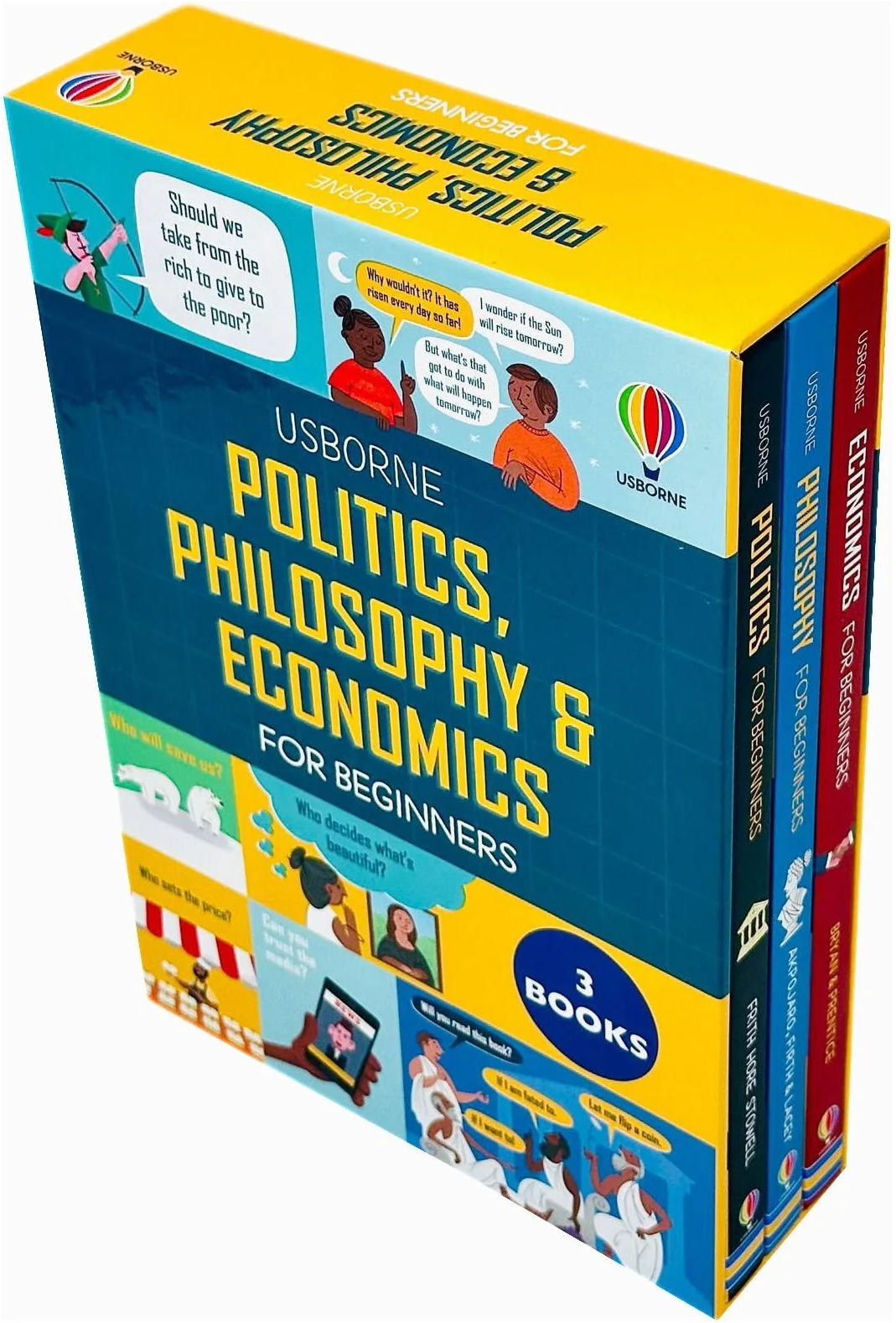
Usborne Big Subjects For Beginners 3 Books Box Set (Politics, Philosophy and Economics)Usborne Big Subjects For Beginners 3 Books Box Set (Politics, Philosophy and Economics) Economics for Beginners Nobody has everything they need, all the time - so how can we make do with what we have? Economics is all about understanding the choices we make to solve this problem. With bright, infographics pictures, this informative book describes why markets. Politics for Beginners With Brexit looming and constant political uncertainty in the UK, people are more confused by politics than ever before. Politics for Beginners answers the questions that people are afraid to ask, offering a no-nonsense guide to what politics is all about. Philosophy for Beginners Philosophy is a way of thinking about just about anything. It asks big questions, such as "how can I be good?" or "what makes something beautiful?" Using lively examples, humorous illustrations and simple thought experiments, this book opens up the world of philosophy to both children and adults and includes links to recommended. Related Tags: Usborne, Usbourne Books14,95 £*Shipping: 2,99 £Secure redirect to the provider
-
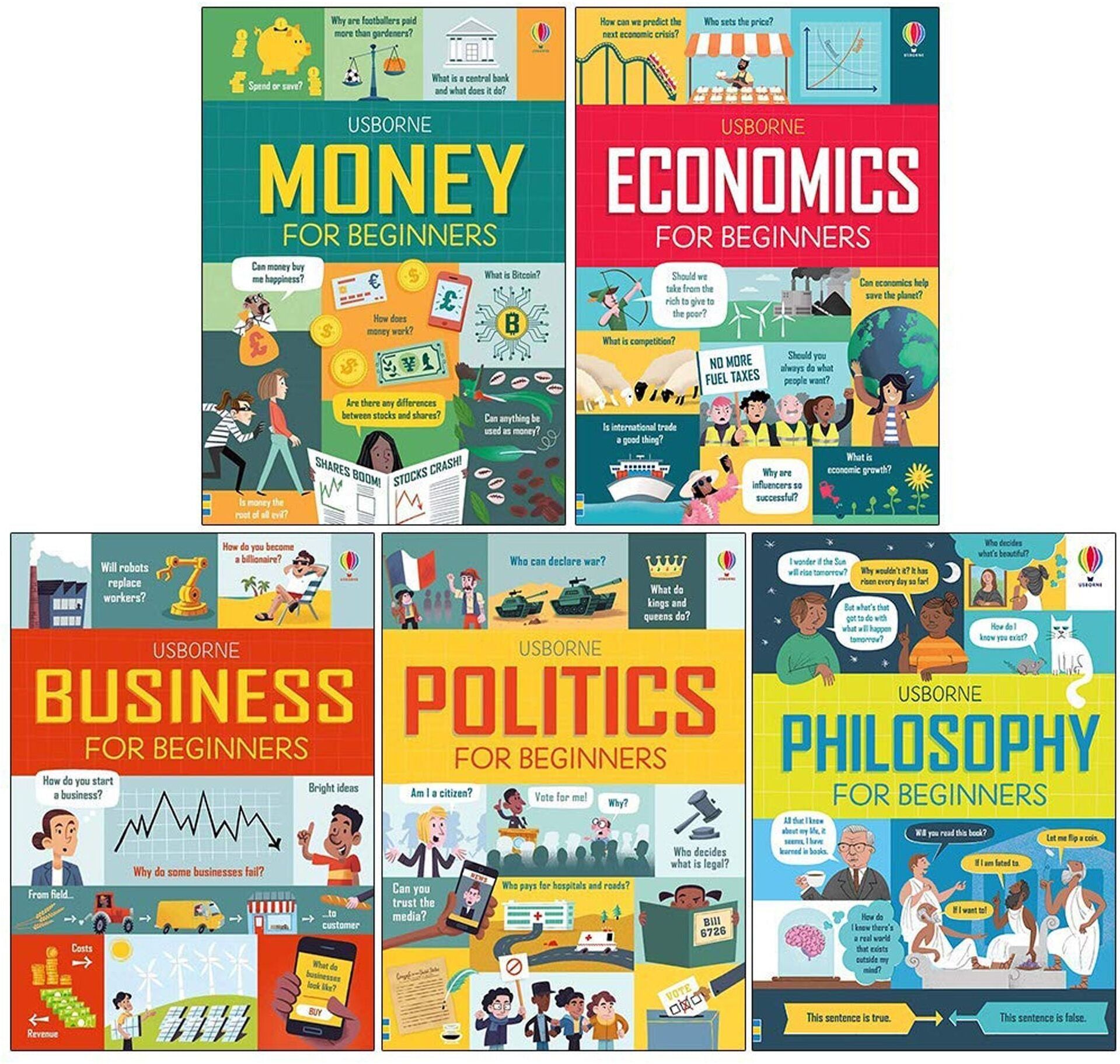
Usborne Big Subjects for Beginners 5 Books Collection Box Set Money, Economics, Business, Politics & Philosophy – Illustrated Educational Learning GHelp children understand the world around them with the Usborne Big Subjects for Beginners – 5 Books Collection Box Set, a beautifully illustrated introduction to some of the most important topics in modern life. Each book breaks down complex ideas into simple, engaging explanations perfect for kids, beginners, and curious young minds.Packed with colourful diagrams, friendly illustrations, quick facts, and clear examples, this set helps young readers explore big ideas with confidence. This educational collection includes: Money for Beginners – Understanding money, saving, spending, and how currency works. Economics for Beginners – Supply, demand, trade, markets, and how economies function. Business for Beginners – How businesses start, operate, grow, and succeed. Politics for Beginners – Governments, elections, laws, democracy, and world politics explained. Philosophy for Beginners – Big questions about life, knowledge, ethics, and thinking skills. Perfect for ages 9–14, home learning, school topics, and young readers who love discovering new knowledge. Related Tags: Usborne, Usbourne Books19,99 £*Shipping: 2,99 £Secure redirect to the provider
-
TP-LINK UE300C USB-C to Ethernet Adapter – Gigabit Connectivity for Ultrabooks & TabletsOverview: The TP-Link UE300C is a compact and efficient USB-C to Gigabit Ethernet adapter, designed to provide high-speed wired internet access to devices lacking an Ethernet port. Ideal for ultrabooks, Chromebooks, and tablets, it ensures stable and fast network connections. Product Description: This lightweight adapter features a USB 3.0 Type-C connector and an RJ45 Gigabit Ethernet port, supporting data transfer speeds up to 1000Mbps. Its plug-and-play functionality ensures easy setup without the need for additional drivers on most operating systems, including Windows 10/8.1/8/7, macOS 10.9 and later, Chrome OS, and Linux. The foldable design enhances portability, making it an excellent companion for on-the-go professionals. Key Features: High-Speed Connectivity: Supports Gigabit Ethernet speeds up to 1000Mbps for seamless streaming, gaming, and large file transfers. Plug-and-Play: No additional drivers required for most operating systems; compatible with Windows, macOS, Chrome OS, and Linux. Compact Design: Slim and foldable, perfect for travel and easy storage. Universal Compatibility: Works with a wide range of USB-C devices, including ultrabooks, tablets, and smartphones. Durable Build: Designed for reliable performance and longevity.9,99 £*Shipping: 0,00 £Secure redirect to the provider
-
What is the difference between foundational subjects, applied subjects, and methodological subjects?
Foundational subjects are the core subjects that provide the fundamental knowledge and skills necessary for a particular field of study, such as mathematics or biology. Applied subjects focus on the practical application of knowledge and skills in real-world settings, such as engineering or business management. Methodological subjects, on the other hand, are concerned with the methods and techniques used to conduct research and analyze data within a specific discipline, such as statistics or research methodology. Each type of subject plays a unique role in shaping a student's understanding and expertise in a given field of study. **
-
What is the difference between foundational subjects, applied subjects, and method subjects?
Foundational subjects provide the fundamental knowledge and theories in a particular field, such as mathematics or biology. Applied subjects focus on the practical application of these foundational concepts in real-world scenarios, such as engineering or business management. Method subjects teach the specific methodologies and techniques used to conduct research or solve problems within a discipline, such as statistics or research methods. Each type of subject plays a crucial role in developing a well-rounded understanding and skill set in a given area of study. **
-
What is the difference between foundational subjects, applied subjects, and methods subjects?
Foundational subjects provide the fundamental knowledge and theories that form the basis of a particular field of study. Applied subjects focus on the practical application of this knowledge in real-world settings. Methods subjects teach the specific techniques and methodologies used to conduct research or solve problems within a discipline. In summary, foundational subjects establish the theoretical framework, applied subjects demonstrate practical implementation, and methods subjects provide the tools for analysis and problem-solving. **
-
'Which subjects?'
Subjects such as mathematics, science, history, and language arts are typically included in a standard school curriculum. These subjects provide students with a well-rounded education and help them develop important skills such as critical thinking, problem-solving, and communication. Additionally, subjects like art, music, physical education, and foreign languages are often included to offer students a diverse range of learning experiences. **
Similar search terms for Subjects
-
Are main subjects or minor subjects more important?
Both main subjects and minor subjects are important in their own ways. Main subjects provide the foundational knowledge and skills necessary for a particular field or discipline, while minor subjects offer additional depth and specialization. The importance of each subject may vary depending on individual goals and career aspirations. It is essential to strike a balance between main and minor subjects to ensure a well-rounded education and skill set. **
-
What could these Muggle subjects be for magical subjects?
These Muggle subjects could be transfiguration, charms, potions, herbology, and magical creatures for magical subjects. Transfiguration could involve the study of changing objects into different forms, while charms could focus on casting spells for various effects. Potions could involve brewing magical concoctions with specific properties, herbology could involve the study of magical plants and their uses, and magical creatures could involve learning about and interacting with different magical beings. **
-
What are the main subjects and minor subjects at the university?
The main subjects at the university typically include fields such as business, engineering, computer science, biology, psychology, and education. These are the primary areas of study that students can major in and pursue a degree. Minor subjects, on the other hand, are secondary areas of study that students can choose to complement their major. These can include subjects like art history, environmental studies, music, or a foreign language. Minor subjects allow students to explore additional interests and gain a broader education. **
-
What are useless subjects?
Useless subjects are topics or courses that do not provide practical skills, knowledge, or value in the real world. These subjects may not have any relevance to a person's career goals or personal interests, making them a waste of time and resources. Examples of useless subjects could include outdated or irrelevant information, overly specialized topics with limited applicability, or courses that do not align with a person's long-term goals. **
* All prices are inclusive of VAT and, if applicable, plus shipping costs. The offer information is based on the details provided by the respective shop and is updated through automated processes. Real-time updates do not occur, so deviations can occur in individual cases. ** Note: Parts of this content were created by AI.