Buy easycontact.eu ?
We are moving the project
easycontact.eu .
Are you interested in purchasing the domain
easycontact.eu ?
domain@kv-gmbh.de · 0541-91531010
Buy easycontact.eu ?
How do you focus a Galilean telescope?
To focus a Galilean telescope, you need to adjust the position of the eyepiece. Start by pointing the telescope at a distant object and then slowly turn the eyepiece in one direction or the other until the image comes into focus. You may need to make small adjustments until the image is clear and sharp. It's important to take your time and be patient when focusing a Galilean telescope to ensure you get the best possible view. **
What is an eyepiece on a Kepler and Galilean telescope?
The eyepiece on a Kepler and Galilean telescope is the lens or set of lenses located at the end of the telescope where the observer looks through. It is responsible for magnifying the image formed by the objective lens or mirror at the other end of the telescope. The design and placement of the eyepiece can affect the field of view, magnification, and overall image quality of the telescope. In both types of telescopes, the eyepiece is a crucial component for allowing the observer to see distant objects with greater clarity and detail. **


Similar search terms for Galilean
Top-Angebote
Products related to Galilean:
-
Uplift Essentials Natural Edible Small Pet Chews Enrichment Dental Interface High Yield Foraging Interaction Hub Natural Edible Small Pet Chews Enrichment Dental Interface High Yield Foraging Interaction HubAchieve nutritional optimization with these Precision Detachable Enrichment Chews. Specifically engineered for biological transparency, this highperformance technical tool acts as a vital tool for dental efficiency, neutralizing the limitations of...67,97 $*Shipping: 0,00 $Secure redirect to the provider
-
Uplifted Finds Solid Wooden Tic Tac Toe Board And Strategic Interaction Interface blueInaugurate a direct energy for your environment with this integrated cognitive solution. This solid wooden TicTacToe board serves as a functional choice for your tactical recreation journeys, offering a highdurability alternative to standard...34,97 $*Shipping: 0,00 $Secure redirect to the provider
-
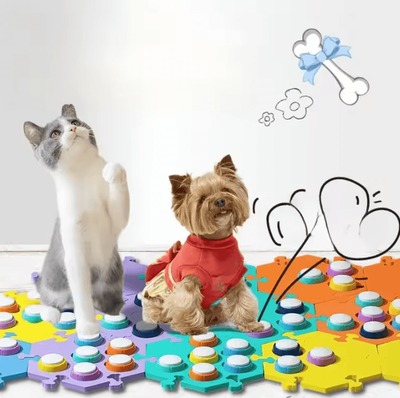
Inspire Curations TalkPaws Dog Communication Buttons For Pet Training & Interaction with Mats 6 PiecesStrengthen the bond with your pet through a fun and engaging way to communicate. These recordable dog communication buttons allow dogs and cats to associate words, actions, and needs with simple button presses, helping create interactive training...145,50 $*Shipping: 0,00 $Secure redirect to the provider
-
Uplift Essentials Vocal Link Interactive Pet Communication Buttons blue"Break the language barrier between you and your pet with the VocalLink Dog Communication Buttons. This innovative pet training buzzer system allows your dog or cat to ""speak"" their needs by pressing a button that plays your prerecorded voice...."34,97 $*Shipping: 0,00 $Secure redirect to the provider



-
Why is God also called the flying Galilean in professional circles?
God is sometimes referred to as the flying Galilean in professional circles because of the belief that He transcends physical limitations and is omnipresent. The term "flying" symbolizes His ability to be everywhere at once, moving swiftly and effortlessly. The term "Galilean" is a reference to Jesus Christ, who was from Galilee and is considered a central figure in Christianity. This nickname highlights the divine and miraculous nature attributed to God in various religious and philosophical contexts. **
-
What is the difference between a Galilean and an astronomical telescope?
The main difference between a Galilean and an astronomical telescope is the way they use lenses to magnify distant objects. In a Galilean telescope, there is a concave lens at the front and a convex lens at the eyepiece, while in an astronomical telescope, there are two convex lenses. Additionally, Galilean telescopes have a wider field of view but lower magnification compared to astronomical telescopes, which have a narrower field of view but higher magnification. Lastly, Galilean telescopes are typically used for terrestrial viewing, while astronomical telescopes are designed for viewing celestial objects. **
-
What is the difference between a prism binoculars and a Galilean binoculars?
The main difference between a prism binocular and a Galilean binocular is the optical design. Prism binoculars use prisms to correct the image orientation, resulting in a more compact design and better image quality. On the other hand, Galilean binoculars do not use prisms and have a simpler design, but they may have a narrower field of view and may not provide as sharp images as prism binoculars. Additionally, prism binoculars are typically more expensive than Galilean binoculars due to their more complex optical system. **
-
Does the resolution of a Kepler-Galilean telescope increase with increasing magnification?
No, the resolution of a Kepler-Galilean telescope does not necessarily increase with increasing magnification. While higher magnification can make objects appear larger and closer, it does not necessarily improve the clarity or sharpness of the image. In fact, increasing magnification without a corresponding increase in the quality of the optics can lead to a decrease in resolution due to factors like image distortion and blurriness. It is important to strike a balance between magnification and optical quality to achieve the best resolution in a telescope. **


How can it be shown that a Galilean transformation forms a group?
A Galilean transformation can be shown to form a group by satisfying the four group axioms: closure, associativity, identity, and inverse. 1. Closure: The composition of two Galilean transformations is also a Galilean transformation, as the equations for the transformations can be combined and still result in a valid transformation. 2. Associativity: The composition of Galilean transformations is associative, meaning that (A*B)*C = A*(B*C) for any three transformations A, B, and C. 3. Identity: The identity transformation, which leaves all coordinates unchanged, is a member of the Galilean transformation group. 4. Inverse: For every Galilean transformation, there exists an inverse transformation that undoes the original transformation, ensuring that every transformation has an inverse within the group. Therefore, a Galilean transformation satisfies all the group axioms and forms a group. **
What is the difference between a prism binocular and a Galilean binocular?
The main difference between a prism binocular and a Galilean binocular is the type of optical system they use. A prism binocular uses a complex system of prisms to correct the image and provide a wider field of view, making them larger and heavier. On the other hand, a Galilean binocular uses a simpler lens system, making them more compact and lightweight. Additionally, prism binoculars generally provide better image quality and brightness, while Galilean binoculars are more affordable and easier to carry. **
Top-Angebote
Products related to Galilean:
-
TP-LINK UE300C USB-C to Ethernet Adapter – Gigabit Connectivity for Ultrabooks & TabletsOverview: The TP-Link UE300C is a compact and efficient USB-C to Gigabit Ethernet adapter, designed to provide high-speed wired internet access to devices lacking an Ethernet port. Ideal for ultrabooks, Chromebooks, and tablets, it ensures stable and fast network connections. Product Description: This lightweight adapter features a USB 3.0 Type-C connector and an RJ45 Gigabit Ethernet port, supporting data transfer speeds up to 1000Mbps. Its plug-and-play functionality ensures easy setup without the need for additional drivers on most operating systems, including Windows 10/8.1/8/7, macOS 10.9 and later, Chrome OS, and Linux. The foldable design enhances portability, making it an excellent companion for on-the-go professionals. Key Features: High-Speed Connectivity: Supports Gigabit Ethernet speeds up to 1000Mbps for seamless streaming, gaming, and large file transfers. Plug-and-Play: No additional drivers required for most operating systems; compatible with Windows, macOS, Chrome OS, and Linux. Compact Design: Slim and foldable, perfect for travel and easy storage. Universal Compatibility: Works with a wide range of USB-C devices, including ultrabooks, tablets, and smartphones. Durable Build: Designed for reliable performance and longevity.9,99 £*Shipping: 0,00 £Secure redirect to the provider
-
Uplift Essentials Vocal Link Interactive Pet Communication Buttons purple"Break the language barrier between you and your pet with the VocalLink Dog Communication Buttons. This innovative pet training buzzer system allows your dog or cat to ""speak"" their needs by pressing a button that plays your prerecorded voice...."34,97 $*Shipping: 0,00 $Secure redirect to the provider
-
Uplift Essentials Natural Edible Small Pet Chews Enrichment Dental Interface High Yield Foraging Interaction Hub Natural Edible Small Pet Chews Enrichment Dental Interface High Yield Foraging Interaction HubAchieve nutritional optimization with these Precision Detachable Enrichment Chews. Specifically engineered for biological transparency, this highperformance technical tool acts as a vital tool for dental efficiency, neutralizing the limitations of...67,97 $*Shipping: 0,00 $Secure redirect to the provider
-
Uplifted Finds Solid Wooden Tic Tac Toe Board And Strategic Interaction Interface blueInaugurate a direct energy for your environment with this integrated cognitive solution. This solid wooden TicTacToe board serves as a functional choice for your tactical recreation journeys, offering a highdurability alternative to standard...34,97 $*Shipping: 0,00 $Secure redirect to the provider
-
How do you focus a Galilean telescope?
To focus a Galilean telescope, you need to adjust the position of the eyepiece. Start by pointing the telescope at a distant object and then slowly turn the eyepiece in one direction or the other until the image comes into focus. You may need to make small adjustments until the image is clear and sharp. It's important to take your time and be patient when focusing a Galilean telescope to ensure you get the best possible view. **
-
What is an eyepiece on a Kepler and Galilean telescope?
The eyepiece on a Kepler and Galilean telescope is the lens or set of lenses located at the end of the telescope where the observer looks through. It is responsible for magnifying the image formed by the objective lens or mirror at the other end of the telescope. The design and placement of the eyepiece can affect the field of view, magnification, and overall image quality of the telescope. In both types of telescopes, the eyepiece is a crucial component for allowing the observer to see distant objects with greater clarity and detail. **
-
Why is God also called the flying Galilean in professional circles?
God is sometimes referred to as the flying Galilean in professional circles because of the belief that He transcends physical limitations and is omnipresent. The term "flying" symbolizes His ability to be everywhere at once, moving swiftly and effortlessly. The term "Galilean" is a reference to Jesus Christ, who was from Galilee and is considered a central figure in Christianity. This nickname highlights the divine and miraculous nature attributed to God in various religious and philosophical contexts. **
-
What is the difference between a Galilean and an astronomical telescope?
The main difference between a Galilean and an astronomical telescope is the way they use lenses to magnify distant objects. In a Galilean telescope, there is a concave lens at the front and a convex lens at the eyepiece, while in an astronomical telescope, there are two convex lenses. Additionally, Galilean telescopes have a wider field of view but lower magnification compared to astronomical telescopes, which have a narrower field of view but higher magnification. Lastly, Galilean telescopes are typically used for terrestrial viewing, while astronomical telescopes are designed for viewing celestial objects. **
Similar search terms for Galilean
-
Inspire Curations TalkPaws Dog Communication Buttons For Pet Training & Interaction with Mats 6 PiecesStrengthen the bond with your pet through a fun and engaging way to communicate. These recordable dog communication buttons allow dogs and cats to associate words, actions, and needs with simple button presses, helping create interactive training...145,50 $*Shipping: 0,00 $Secure redirect to the provider
-
Uplift Essentials Vocal Link Interactive Pet Communication Buttons blue"Break the language barrier between you and your pet with the VocalLink Dog Communication Buttons. This innovative pet training buzzer system allows your dog or cat to ""speak"" their needs by pressing a button that plays your prerecorded voice...."34,97 $*Shipping: 0,00 $Secure redirect to the provider
-
Uplift Essentials Vocal Link Interactive Pet Communication Buttons orange"Break the language barrier between you and your pet with the VocalLink Dog Communication Buttons. This innovative pet training buzzer system allows your dog or cat to ""speak"" their needs by pressing a button that plays your prerecorded voice...."34,97 $*Shipping: 0,00 $Secure redirect to the provider
-
Uplift Essentials Vocal Link Interactive Pet Communication Buttons green"Break the language barrier between you and your pet with the VocalLink Dog Communication Buttons. This innovative pet training buzzer system allows your dog or cat to ""speak"" their needs by pressing a button that plays your prerecorded voice...."34,97 $*Shipping: 0,00 $Secure redirect to the provider
-
What is the difference between a prism binoculars and a Galilean binoculars?
The main difference between a prism binocular and a Galilean binocular is the optical design. Prism binoculars use prisms to correct the image orientation, resulting in a more compact design and better image quality. On the other hand, Galilean binoculars do not use prisms and have a simpler design, but they may have a narrower field of view and may not provide as sharp images as prism binoculars. Additionally, prism binoculars are typically more expensive than Galilean binoculars due to their more complex optical system. **
-
Does the resolution of a Kepler-Galilean telescope increase with increasing magnification?
No, the resolution of a Kepler-Galilean telescope does not necessarily increase with increasing magnification. While higher magnification can make objects appear larger and closer, it does not necessarily improve the clarity or sharpness of the image. In fact, increasing magnification without a corresponding increase in the quality of the optics can lead to a decrease in resolution due to factors like image distortion and blurriness. It is important to strike a balance between magnification and optical quality to achieve the best resolution in a telescope. **
-
How can it be shown that a Galilean transformation forms a group?
A Galilean transformation can be shown to form a group by satisfying the four group axioms: closure, associativity, identity, and inverse. 1. Closure: The composition of two Galilean transformations is also a Galilean transformation, as the equations for the transformations can be combined and still result in a valid transformation. 2. Associativity: The composition of Galilean transformations is associative, meaning that (A*B)*C = A*(B*C) for any three transformations A, B, and C. 3. Identity: The identity transformation, which leaves all coordinates unchanged, is a member of the Galilean transformation group. 4. Inverse: For every Galilean transformation, there exists an inverse transformation that undoes the original transformation, ensuring that every transformation has an inverse within the group. Therefore, a Galilean transformation satisfies all the group axioms and forms a group. **
-
What is the difference between a prism binocular and a Galilean binocular?
The main difference between a prism binocular and a Galilean binocular is the type of optical system they use. A prism binocular uses a complex system of prisms to correct the image and provide a wider field of view, making them larger and heavier. On the other hand, a Galilean binocular uses a simpler lens system, making them more compact and lightweight. Additionally, prism binoculars generally provide better image quality and brightness, while Galilean binoculars are more affordable and easier to carry. **
* All prices are inclusive of VAT and, if applicable, plus shipping costs. The offer information is based on the details provided by the respective shop and is updated through automated processes. Real-time updates do not occur, so deviations can occur in individual cases. ** Note: Parts of this content were created by AI.